Monday, August 19, 2019

Science Journal Blog Entry 4: Inquiry Lesson (Radiation and Heat Absorption)

How does color affect heat absorption?


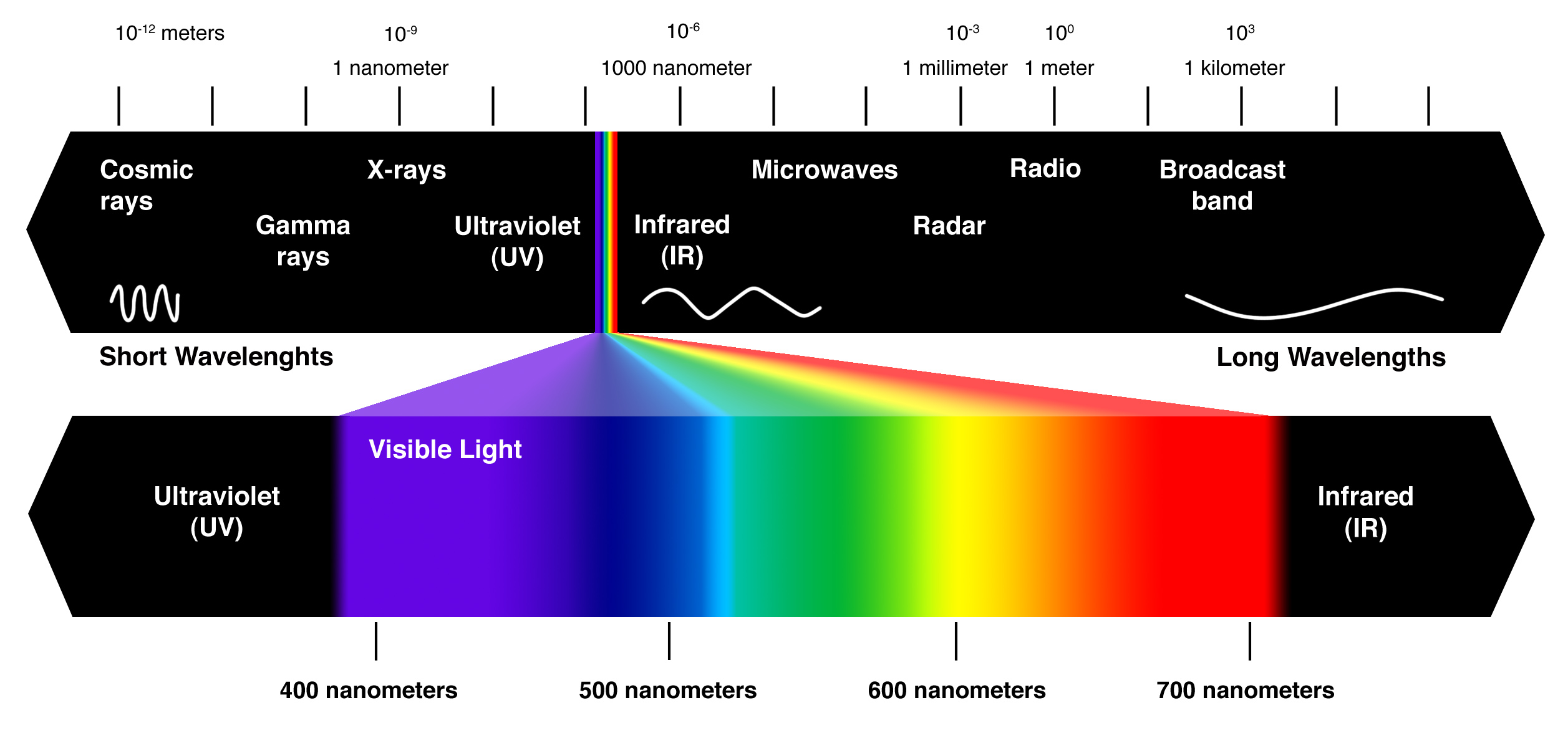
    During this inquiry lesson students work outdoors to collect temperature readings every minute from 9 different colors being exposed to solar radiation. It is best to complete this inquiry lesson on a clear sunny day, which can be exciting for students to be doing science outside. Students will collect temperature readings every minute for 20 minutes of heating (in direct sunlight) and 20 minutes of cooling (out of direct sunlight). Each color will absorb(during heating) and release heat (during cooling) at a different rates. Students are asked to create a Google Sheets data table to enter their data (which can also help with creating a graph). Once complete, students will connect how color affects, or plays a role in the application and construction of different materials we buy, wear, and use everyday.
   This lesson was originally created for my 7th grade students, but being that it is summer time I had to use a much younger group of students. This turned out to provide me with a new perspective on the lesson; especially how I can make better, more appropriate modifications for students. Working with a younger group of students also gave me an appreciation for their genuine excitement for learning. It was so great to see kids be curious and ask questions because they were honestly discovering new science concepts.
    Thank you!

Set-up outside with the 9 different colors (in the sun on a 90+ day)

Data collected during the heating period using Google Sheets.


Graph created using Google Sheets.

Monday, July 22, 2019

Science Journal Blog Entry 3: What happens if the polar ice caps melt?

What happens if the polar ice caps melt?

Picture from: https://www.abc.net.au/news/2019-02-26/foreign-correspondent-climate-change-geoengineering/10833878

The melting of the polar ice caps has a ripple effect on the many connected systems on Earth. The most obvious result from the melting ice is a rise in sea levels. Since 1993 global sea levels have risen 3 inches, and the rate is accelerating ( Lindsey, 2018). With 8 of the world's 10 largest cities, and 40% of the US population living in coastal areas the implications of an increase in sea levels could be devastating (Lindsey, 2018). The increase is sea level could lead to more frequent flooding, stronger storm surges, increased erosion, displacement of animals and humans. All of these things cause economic stress on a community.

There is a huge domino effect as a result of melting ice caps. Some of the effects include more solar energy being absorbed by land and water instead of reflected back out into space by the ice (UCAR Center for Science, n.d.). Absorbing more solar radiation leads to the melting of permafrost, which then releases stored greenhouse gases (CO2 and Methane), which then leads to more heat storing potential of the atmosphere, which then melts more ice. The meltwater from the ice caps enters the ocean and becomes part of an ocean current. Ocean currents help distribute heat throughout the world and influence weather patterns (Harvey, 2019). Additionally, the meltwater can slow down ocean currents which are put in motion by the "density driven thermohaline (temperature and salinity)" (Glick, 2017). This is another example of how deeply connected the systems on Earth can be. Each having a role on how well the other runs efficiently. The ripple effect continues.  

Additional questions:
  1. How will students be assessed on the content in this experience?
  2. How can this experience be differentiated for multiple ability levels?
  3. What can humans do to slow down or help reverse the melting?
  4. What role will future scientists or other occupations play in controlling the amount of melting ice and climate change?

References


“Climate and Ice.” Climate and Ice | UCAR Center for Science Education, scied.ucar.edu/longcontent/climate-and-ice.

Glick, Daniel. “Global Climate Change, Melting Glaciers.” Global Climate Change, Melting Glaciers, National Geographic, 18 Jan. 2017, www.nationalgeographic.com/environment/global-warming/big-thaw/.

Harvey, Chelsea. “Melting Ice Sheets Could Worsen Extreme Weather.” Scientific American, Scientific American, 7 Feb. 2019, www.scientificamerican.com/article/melting-ice-sheets-could-worsen-extreme-weather/.

Lindsey, Rebecca. “Climate Change: Global Sea Level: NOAA Climate.gov.” Climate Change: Global Sea Level | NOAA Climate.gov, 1 Aug. 2018, www.climate.gov/news-features/understanding-climate/climate-change-global-sea-level.

Sunday, July 21, 2019

Science Journal Blog: Entry 2- Enhancing lessons with inquiry

Additional reading for students to supplement the non-Newtonian inquiry enhanced lesson.


Potential Articles for Study:

Are any toothpaste ingredients dangerous to your health? (2019). Consumer Reports. 

Are ‘natural’ toothpastes not as effective? A new report sparks debate. (2018).

Austin, J. (2019). Dentist’s view of Colgate vs. Crest toothpaste debate. Verywell 

Louis, C.S. (2016). Why a chemical banned from soap is still in your toothpaste. New 

Saturday, July 13, 2019

Science Journal Blog: Entry 1- Reflection on STEM lesson plan template.

STEM Lesson Plan Template Reflection:


This is my first class at Walden University as part of their Graduate Certification K-8 program, therefore it is the first time using this lesson plan template. I encountered some difficulty with understanding what each section of the template required and the amount of detail needed in each section to be adequate. Makes me feel a bit rusty!😬


The lesson plan template is definitely thorough, but to me it is seems a bit cumbersome. There are aspects of the template that I thought helped me keep the focus on students; in particular the 5 E's. It was worthwhile to think through each connection. While completing my weekly lesson plans I usually do not include this level of detail for each step in the lesson, but I do include ideas very similar to that of the 5 E's strategy.The 5 E's strategy just uses different terminology than I normally use in my lesson plans. 


The STEM (or is it STEAM?) lesson that I created centered around student choice, student interest, and real-world connection. "Students are often motivated to learn if they understand the real-world applications of what they are learning" (Traurig and Feller, 2009, p.2.) We have science fair, so why not make a STEM fair! For this lesson I would have students design a STEM activity that is directly connected to a real-world issue (energy consumption, disposable plastics, drones, forces of nature, climate change, etc...) A list of the topics could be provided, but some students will want to find their own. Students will collaborate with at least one other student to design an activity for their classmates to complete during the STEM fair week. This lesson would take 2 weeks to complete, but would replace/update/revitalize several lessons on the scientific method. 


As I attempted to complete the lesson plan template I couldn't help to think about the time constraints place upon teachers during the school year. One would hope that completing this lesson plan template more frequently, and being more familiar with its' requirements would shorten the length of time needed to complete the template. Otherwise, I feel as if it would be demanding, and a real challenge to complete the template for every single lesson I teach throughout the entire school year.


References:
STEM curriculum for K-12. Teach Engineering. Retrieved July 12, 2019, from       https://www.teachengineering.org/

Traurig, A. & Feller, R. (2009). Preparing students for STEM careers. National Career Development        Association. 

Monday, July 8, 2019

The Science of Summer.

My 6 year loves to ask questions, which makes me proud 😁. It has been really warm and humid in our area for the last few weeks, and we have had several severe thunderstorms as a result. My son noticed the pattern and asked me why are we having so many storms. My reply was simple, EL NINO! But then I launched into the scientific explanation,  to which he replied EL NINO! We laughed and laughed. 

The next day he asked me "Why is it still light outside at 9 o'clock at night?" "Is it El Nino's fault?" This lead to a soccer ball, tennis ball, headlamp demonstration out in the backyard. How cool is it that my 6 year old is asking me science questions? I love it!


Thursday, June 27, 2019

Student reflection on the 1st half of the year.

Reflect on last school year. Did you accomplish any of your goals? Set a NEW goal for this upcoming 7th grade school year.

   Please take a moment to blog a reflection on last school year. Use the following questions as a guide for your reflection.
  • How do you feel the school year went for you? 
  • What are some good things or successes happened during the school year? 
  • Did you experience any difficulties (academics, friends, sports, etc...)?
  • Would you make any changes?
  • How did you grow as a person and as a student?
   Now set a NEW goal that you would like to achieve during the upcoming school year. This goal could include information about academics, changes in behaviors or habits, altering your attitude or outlook, etc... Please include your new goal with your reflection response.
   
Thank you. I look forward to reading your responses.
   Mr. Hough.